Filters
14 products
Bottle Cage Mounts
Bottle Cage Storage for Tubeless Repair Tools and CO₂
Bottle cage storage refers to on-bike storage solutions that mount directly beneath the bottle cage to carry tubeless repair tools and CO₂ cartridges. This placement keeps essential repair equipment securely attached to the bike while preserving a clean and balanced setup. By using the space under the bottle cage, repair gear stays centrally positioned, easily accessible, and protected without interfering with hydration or aerodynamics.
Bottle cage storage explained
Bottle cage storage is a form of integrated on-bike storage designed specifically for repair equipment rather than personal items. Unlike off-bike storage such as saddle bags or jersey pockets, bottle cage storage keeps tools fixed directly to the frame, where weight distribution and stability are easier to control. Mounting repair gear beneath the bottle cage places it close to the bike’s center of mass, reducing movement and minimizing the impact on handling.
This approach is especially suited to tubeless systems, where quick access to plugs and inflation is important. A bottle cage storage setup allows tools such as plug holders and CO₂ cartridges to remain consistently positioned, protected from external impacts, and ready for use. The result is a streamlined solution that integrates seamlessly with modern bike frames while keeping essential repair equipment exactly where it is needed.
Different types of bottle cage storage setups
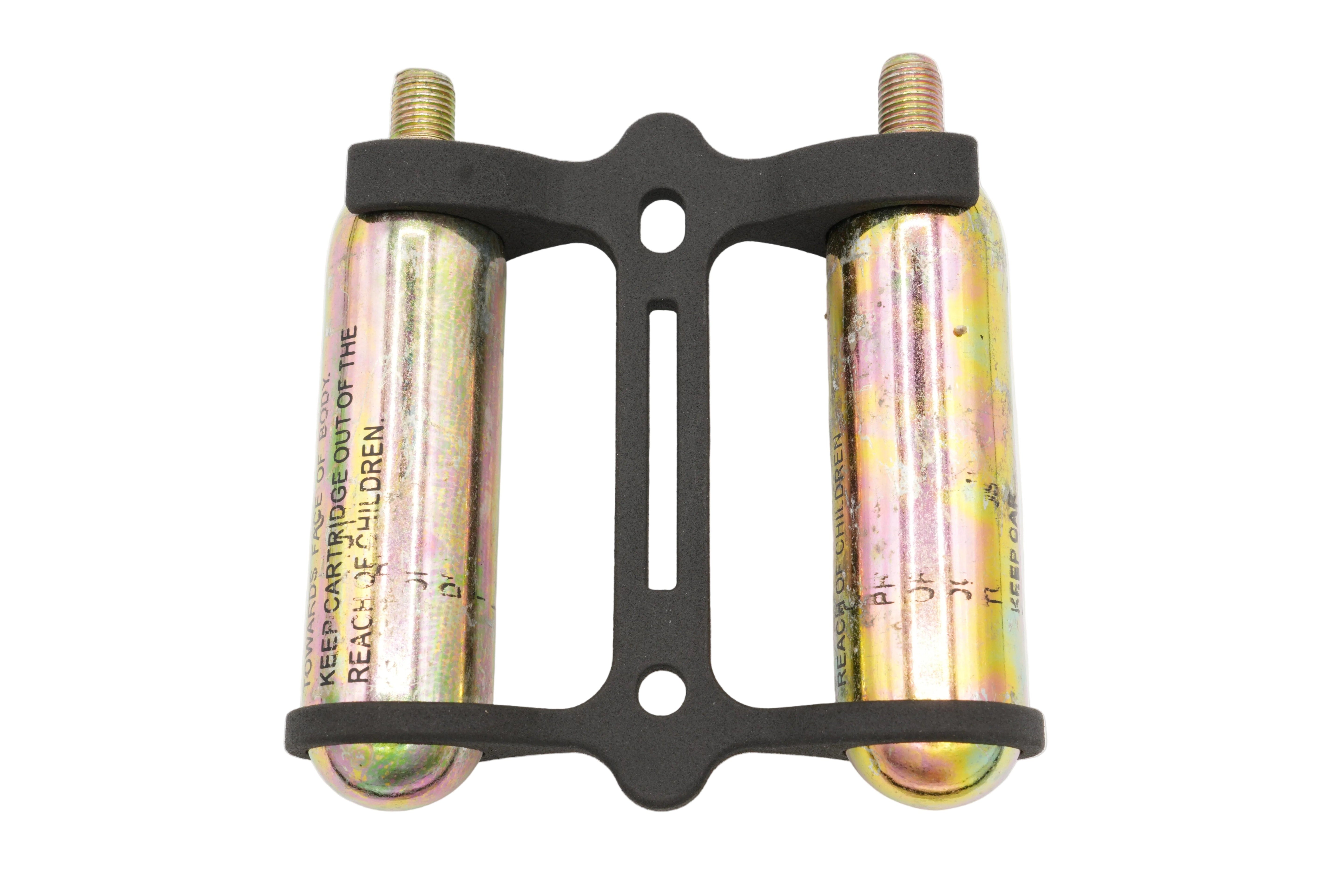
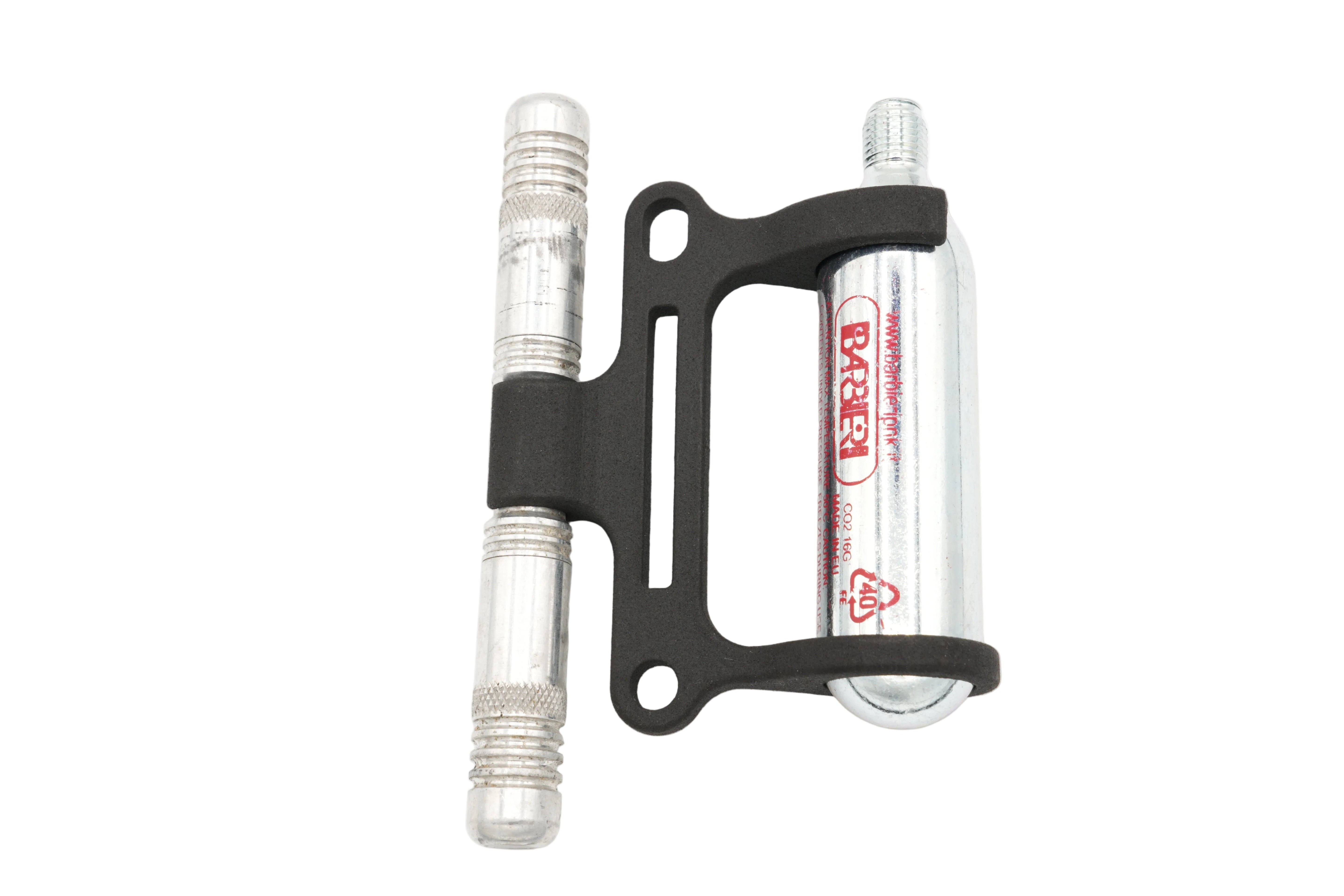
Bottle cage storage covers several functional setups designed to carry repair equipment directly on the bike. Some solutions focus exclusively on CO₂ storage, keeping one or two cartridges secured under the bottle cage for fast inflation after a puncture. These setups suit riders who prefer a simple and lightweight configuration without additional tools.
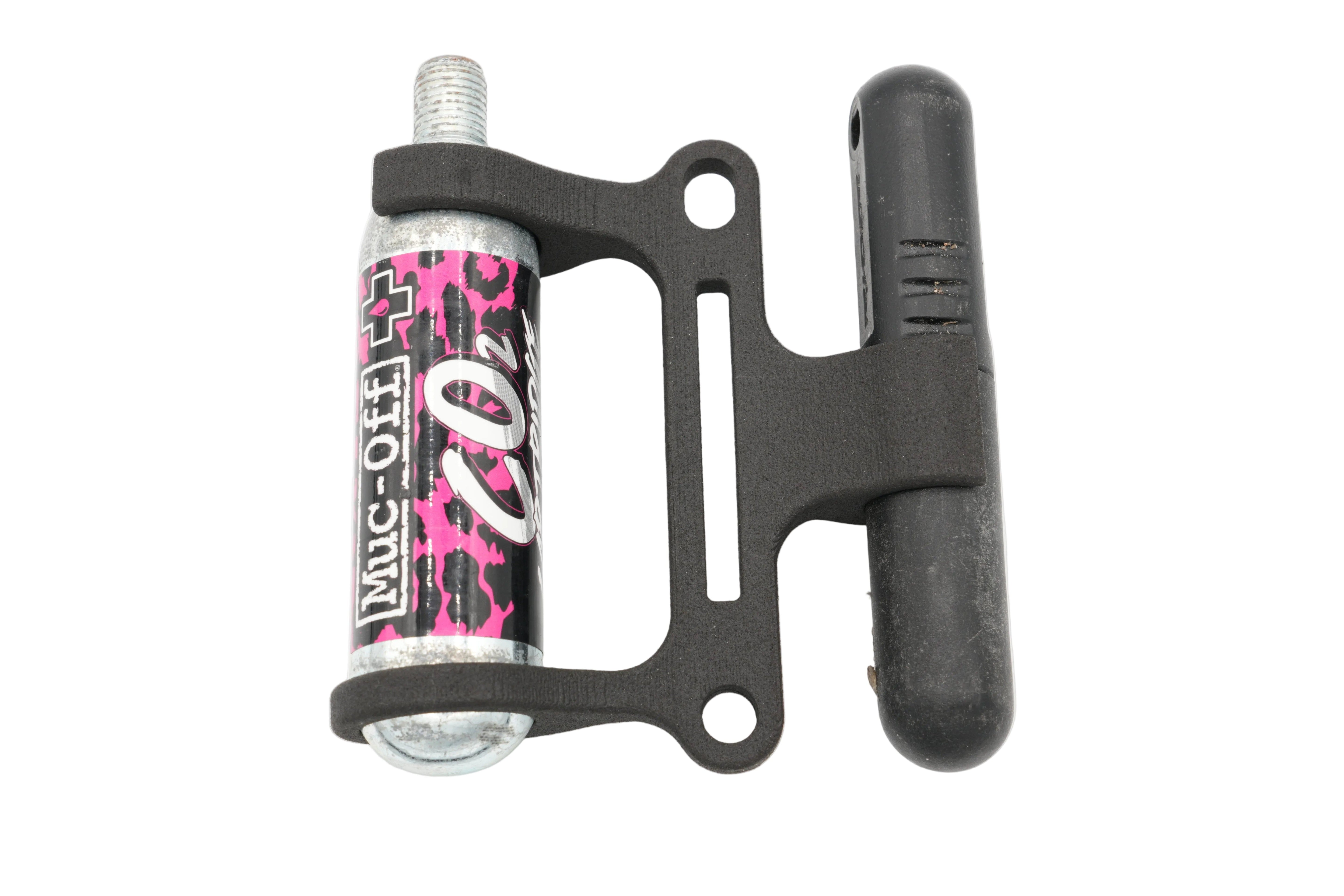
Other setups combine tubeless repair tools with CO₂ cartridges in a single mount. This approach creates a complete on-bike repair system where plugs and inflation are stored together and remain consistently accessible. Tool-based systems often accommodate popular tubeless plug formats, including designs inspired by Dynaplug and Ryder Slug Plug concepts, without changing the overall mounting principle.
Capacity also varies between single and dual cartridge storage. Single-cartridge setups prioritize minimal weight and compact dimensions, while dual-cartridge solutions add redundancy and higher inflation capacity for longer or more demanding rides. Each configuration follows the same core idea of keeping repair gear integrated beneath the bottle cage while adapting to different repair needs.
When bottle cage storage makes sense
Bottle cage storage is particularly relevant on rides where access to repair equipment needs to be fast and predictable. Longer rides benefit from having tools and inflation equipment fixed directly to the bike rather than distributed across pockets or bags. This reduces the risk of forgetting essential items and keeps the setup consistent from ride to ride.
Minimalist bike setups also benefit from bottle cage storage. By using existing mounting points on the frame, repair equipment can be carried without adding external bags or clutter. This approach suits riders who prefer a clean visual profile and a setup that stays unchanged across different riding conditions.
Tubeless systems are another natural match for bottle cage storage. Plug tools and CO₂ cartridges are often used together, and mounting them beneath the bottle cage ensures they remain protected, stable, and immediately accessible when needed.
Bottle cage storage compared to other carry options
Bottle cage storage differs from traditional saddle bags by focusing on fixed, low-profile integration rather than flexible storage volume. Saddle bags can carry a wider range of items, but they introduce movement and sit further from the bike’s center of mass. Bottle cage storage keeps repair equipment closer to the frame, which can improve stability and reduce unwanted motion.
Jersey pockets offer quick access but rely on the rider rather than the bike to carry essential tools. This can affect comfort on longer rides and introduces the risk of forgetting equipment when switching kits or bikes. Bottle cage storage removes that dependency by keeping repair tools permanently mounted on the bike.
Each carry option serves a different purpose. Bottle cage storage is best suited to riders who want a dedicated, integrated solution for repair equipment without adding bulk or relying on wearable storage.
Choosing the right bottle cage storage solution
The right bottle cage storage solution depends on how repair equipment is used during a ride. Tool type is a key factor, as some setups are built around compact plug tools while others are designed to carry both tools and inflation in one integrated unit. Inflation needs also influence the choice, since single-cartridge storage supports lightweight setups, while dual-cartridge solutions add extra capacity for longer or more demanding rides.
Space preference plays an important role as well. Bottle cage storage prioritizes a fixed and minimal footprint on the frame, making it suitable for riders who want repair equipment mounted permanently without external bags. Selecting a solution that matches both repair habits and bike layout ensures that tools remain accessible, stable, and integrated without unnecessary complexity.
Bottle cage storage as part of a complete setup
Bottle cage storage fits naturally into a broader selection of functional bike accessories designed to optimize on-bike integration. By using existing frame mounting points, repair equipment can be carried in a way that preserves balance and keeps the setup consistent across different rides. As part of a wider range of bike accessories, bottle cage storage supports a clean and practical approach to organizing essential equipment directly on the bike.
Bottle cage storage provides a focused solution for carrying tubeless repair tools and CO₂ cartridges directly on the frame. By positioning repair equipment beneath the bottle cage, this approach maintains balance, accessibility, and a clean bike setup. As an integrated storage option, it supports consistent preparation and efficient repairs without adding unnecessary bulk or complexity.